Breaking News • Music • Culture
Thirty Years Later: A Verdict in the Killing That Changed Hip-Hop Forever
By Urban Global Entertainment & Media
Editorial Desk
September 1, 2026
Nearly three decades after Tupac Shakur was fatally shot in Las Vegas, a jury has delivered the first conviction in a case that became one of the most enduring mysteries in music history.
There are moments in music history that become bigger than the night on which they happened.
September 7, 1996 was one of them.
Tupac Shakur was riding through Las Vegas with Death Row Records co-founder Marion “Suge” Knight when gunfire erupted from a vehicle that pulled alongside them.
Shakur was struck multiple times.
Six days later, at only 25 years old, he died.
What followed was nearly three decades of questions.
There were investigations.
There were theories.
There were interviews, documentaries, books and countless conversations about what happened that night and whether anyone would ever be held criminally responsible.
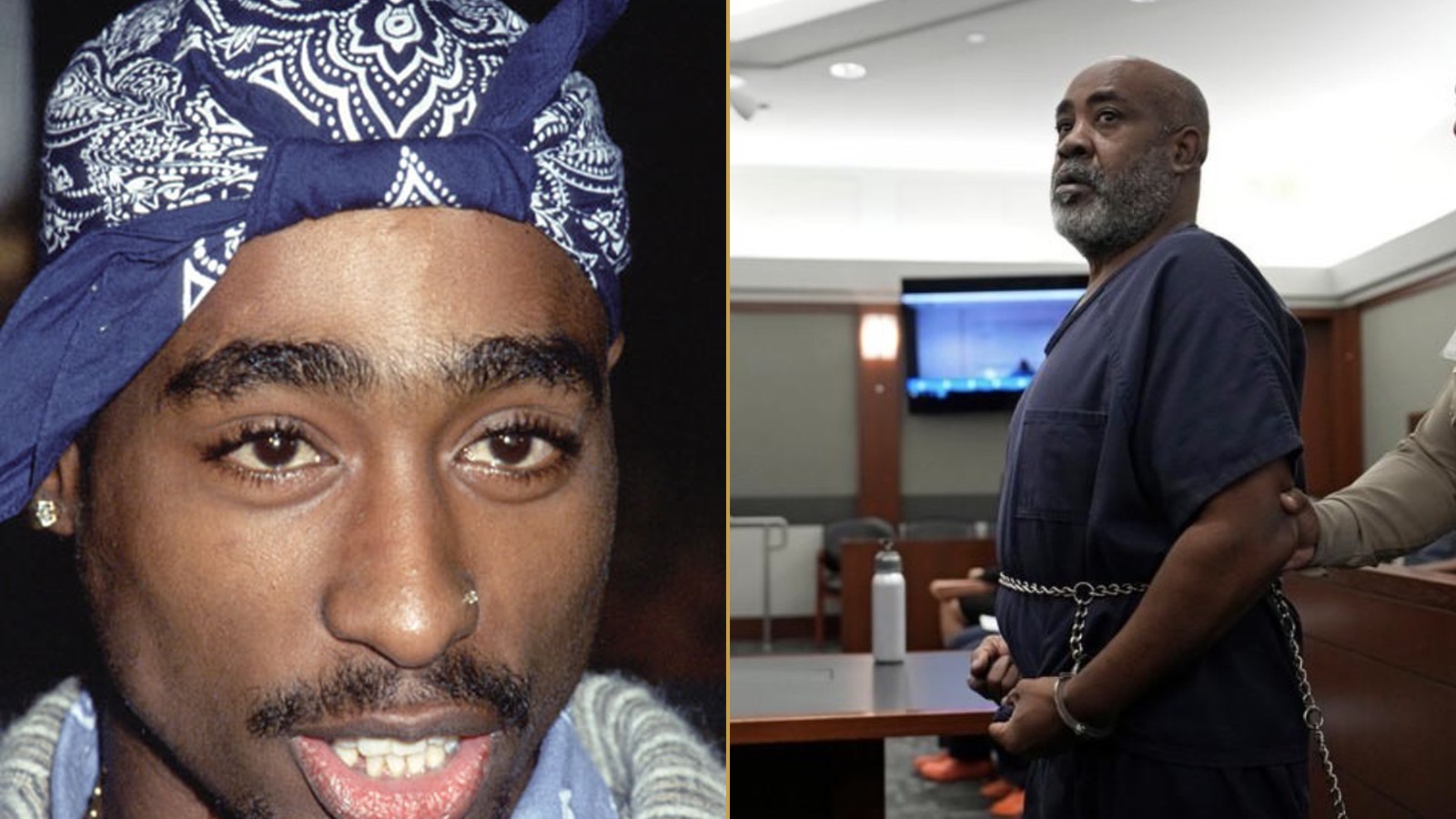
Now, nearly 30 years later, a jury has delivered the first conviction in Tupac Shakur’s killing.
Duane “Keffe D” Davis was found guilty of first-degree murder with the use of a deadly weapon after a Las Vegas trial centered largely on statements Davis himself made over the years about the shooting.
Jurors deliberated for less than three hours before reaching their verdict.
But one distinction matters.
Prosecutors did not accuse Davis of personally firing the shots that killed Tupac.
Instead, prosecutors argued that Davis orchestrated the retaliatory attack, obtained the gun and participated in the events that led to the shooting.
Under Nevada law, a person who aids or assists in carrying out a murder can also be held criminally responsible for that murder.
The prosecution argued that the shooting followed an altercation earlier that evening at the MGM Grand involving Tupac, members of Suge Knight’s entourage and Davis’ nephew.
For prosecutors, however, some of the most significant evidence eventually came from Davis himself.
Over the years, Davis publicly discussed the events surrounding Tupac’s death through interviews, documentaries and his 2019 memoir.
Those statements became central to the prosecution’s case.
His defense challenged that narrative.
Attorneys for Davis argued that his public accounts were exaggerated or fabricated for attention and financial gain and questioned whether the decades-old investigation produced enough independent evidence to support the prosecution’s case.
The jury ultimately disagreed.
Davis was convicted.
He is scheduled to be sentenced October 13 and has indicated that he intends to appeal.
But the courtroom verdict represents only one part of this story.
Because Tupac Shakur was never simply the subject of a murder investigation.
He became a cultural symbol.
At 25, Tupac had already created a body of work that wrestled with poverty, inequality, violence, ambition, family, loyalty, survival and the contradictions of American life.
His music could be confrontational one moment and deeply vulnerable the next.
That complexity is part of why his voice survived him.
Generations who were not alive when Tupac recorded his music have discovered it decades later.
His photographs remain recognizable.
His lyrics continue to be quoted.
His albums continue to be studied, streamed and debated.
And his influence can still be heard throughout hip-hop.
That is why this verdict carries a weight extending beyond a Las Vegas courtroom.
For nearly 30 years, the question surrounding Tupac’s death became part of the mythology surrounding his life.
Now there is a conviction.
It cannot return what was lost.
It cannot tell us what Tupac might have written, recorded, produced or become had he lived beyond 25.
And it cannot erase the decades his family spent waiting for accountability.
But it represents something that once seemed increasingly unlikely:
A courtroom answer in a case many believed would never reach this moment.
Thirty years later, Tupac Shakur remains one of hip-hop’s most recognizable voices.
The tragedy is that the world only got 25 years of his life.
The extraordinary part is how much of his voice remains.
— Urban Global Entertainment & Media Editorial Desk
Tags